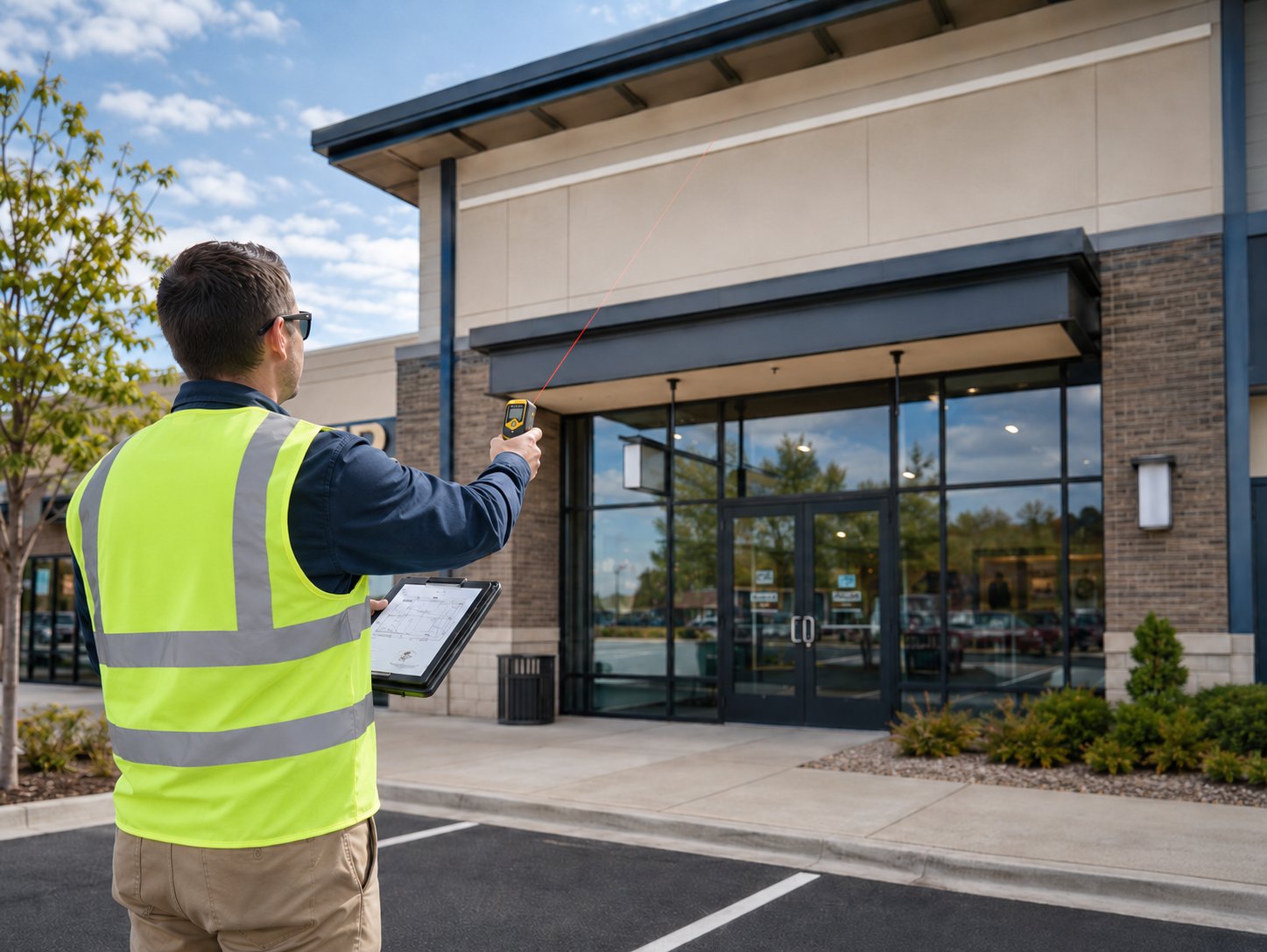
The field survey is where a sign project either gets set up to succeed or starts accumulating problems. A rushed or incomplete survey doesn’t just create headaches for the sign company. It creates surprises for the client: cost overruns, installation delays, permit rejections, designs that get scrapped because a restriction nobody checked is now in the way. Here’s what a thorough field survey covers, and the things that most commonly fall through the cracks.
What the Checklist Should Include
Site documentation and photography
Every elevation of the building. Existing signage — dimensions, placement, condition, and how it’s illuminated. Storefront features that affect sign placement: canopies or awnings, recesses, columns, architectural details. And photos of all of it — not just the front facade. The sides, the electrical panel, blocking and access behind the wall, the approach from the street.
Measurements
Building face width and height at the proposed sign location. The sign placement area itself — not approximate, measured. Any overhead or lateral obstructions. Setbacks from property lines, sidewalks, curbs, and paths of travel. These numbers have to be accurate before design can be finalized.
Substrate and structural
What is the sign going onto? EIFS (synthetic stucco), concrete masonry, metal framing, wood stud — each may require a different mounting approach. While on site: is there structural backing behind the face material, or will anchor points need to be engineered differently?
Electrical
Illuminated signs need power. The survey should document voltage available at or near the sign location, the distance from the electrical panel, whether conduit already exists or needs to be run, and where the closest accessible tie-in point is. These details directly affect both the fabrication and installation quote.
Permitting and landlord context
Municipality name and jurisdiction — not just city, because permit jurisdictions don’t always follow city limits. Landlord contact information and any existing signage criteria or lease restrictions. HOA or covenant status if applicable. Adjacent tenant signage is worth photographing too; it gives context on what’s been approved before and what the landlord will expect for consistency.
Sight lines and visibility
Is the proposed sign location actually visible from the street? What’s between the sign and the driver? Full tree canopy coverage, a utility pole, a neighboring monument sign — these only become obvious from the ground. The survey should include photos from the approach direction at street level, not just from the building face.
What Gets Missed — And What It Costs
Even experienced project managers miss things. Here are the most common gaps.
Power assumptions. “I figured there was power nearby” is behind more return trips than almost anything else. Electrical work is expensive. If the panel is on the opposite side of the building and nobody confirmed that during the survey, that discovery lands during installation at the worst possible time.
Skipping the landlord conversation. Many commercial leases have signage restrictions: maximum square footage, approved illumination types, color limitations, mounting methods the landlord won’t allow. If those restrictions aren’t reviewed before design begins, you can end up with a client who’s approved a design they love — that the landlord will never approve. Catching it at survey is free, catching it after production is expensive.
Incomplete photo documentation. Measurements without photos create disputes. Damage to an existing fascia, sloped grades, obstructions in the vicinity, utility flags, or even a previous sign left a ghost outline on the building face — photograph it. Document the site as you found it, every time.
Visibility blind spots. A sign positioned at 8 feet OAH may be completely blocked from the street by a hedge that isn’t on any site plan. Aerial views and Google Street View are useful for pre-visit prep. They’re not a substitute for standing at the curb and looking.
Setback gaps. Clearance requirements from sidewalks, fire lanes, and ADA paths of travel aren’t always obvious from a site plan. On-site measurement, cross-referenced with the applicable municipal code, is the only way to confirm. A sign that’s six inches inside a required setback doesn’t just fail permit — it may have to be relocated entirely leading to
The Bottom Line
A good field survey takes more time than a quick site visit. That investment pays off in fewer change orders, cleaner permit submissions, faster installations, and clients who don’t feel like they discovered the real cost halfway through the project.
If you’re preparing for a sign project and your sign company hasn’t asked for site photos, measurements, electrical access information, and your lease’s signage criteria — those are reasonable things to ask about. The quality of the survey is a reliable early indicator of how the rest of the project will go.
Questions about what our survey process covers? Contact us here.
