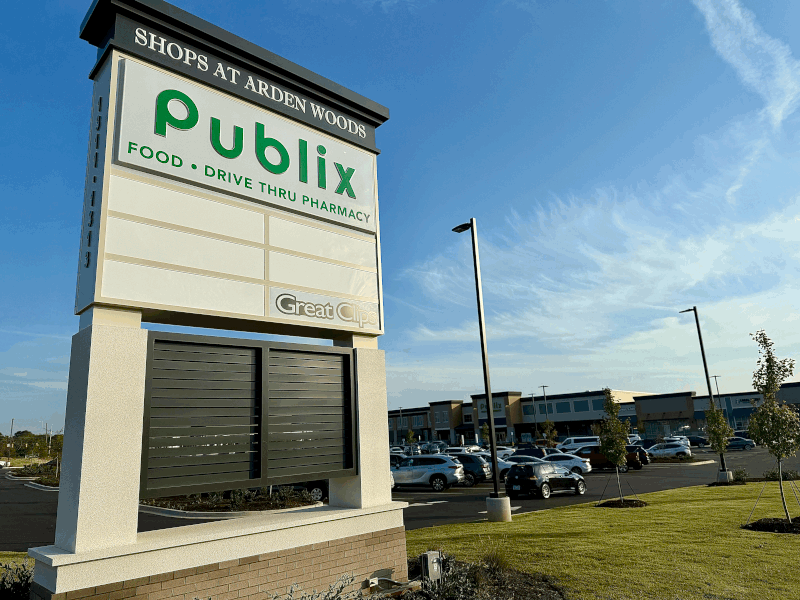
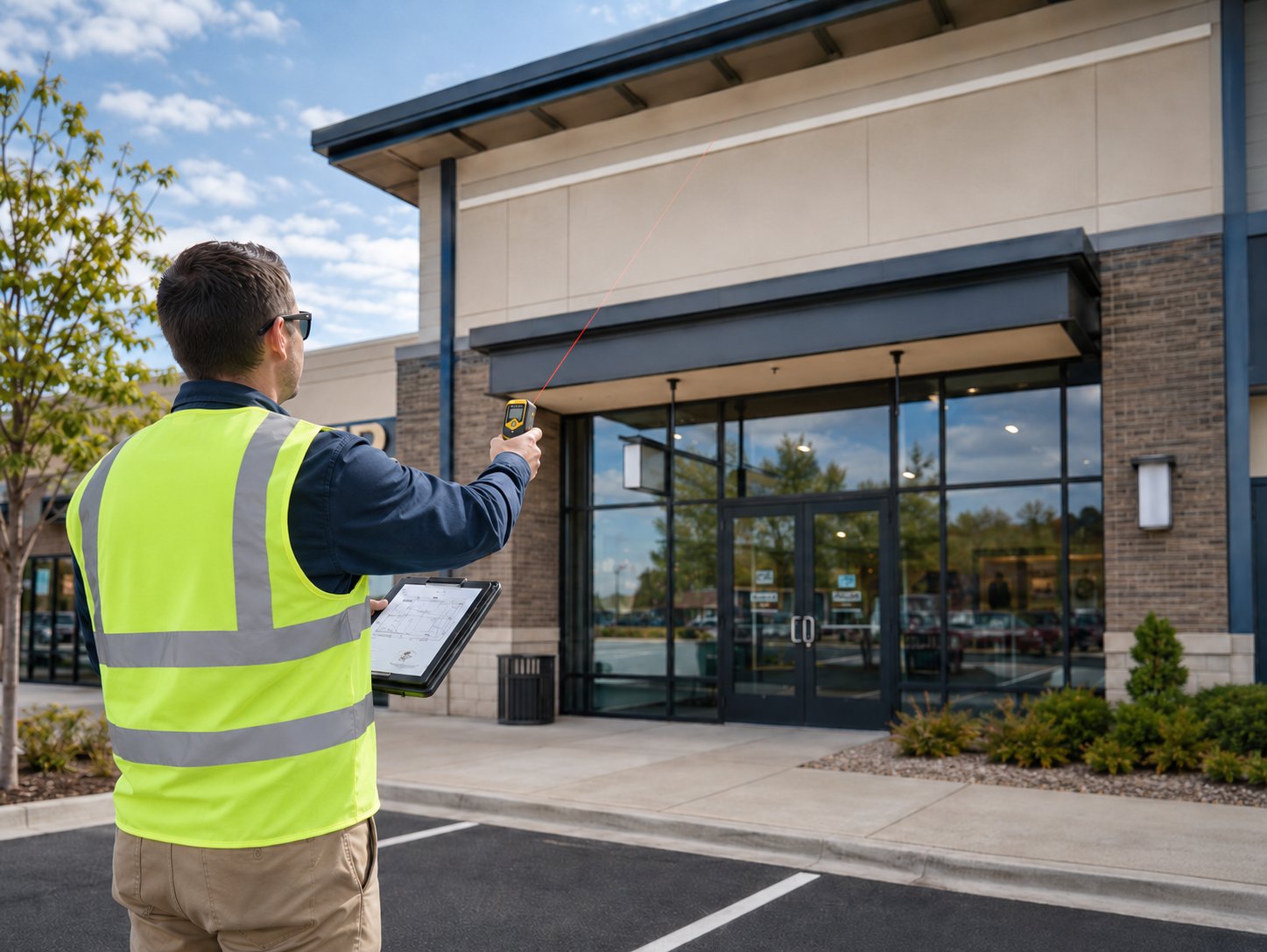
When a business owner, property developer, or municipality commissions a monument sign, the conversation often starts with aesthetics — what should it look like, what colors, how big? Those are important questions. But the decisions that most often derail a monument sign project have nothing to do with design. They happen in the planning phase, long before fabrication begins.
This guide walks through what you actually need to know before your next monument or site sign project gets underway.
Your AHJ May Already Have Opinions About Your Sign
One of the first things an experienced signage partner will do is review the Authority Having Jurisdiction (AHJ) requirements for your specific location. That means your city or county zoning office, and in some cases a private development’s CC&Rs or design standards.
Why does this matter early? Because many jurisdictions have specific requirements baked into their sign ordinances or zoning codes that directly affect design and material choices. Some require that monument signs incorporate masonry or natural stone. Others mandate that signage materials match or complement the primary building facade. Certain planned developments or commercial corridors have their own overlay districts with curated color palettes, height restrictions, or style guidelines.
Falling in love with a design before checking these requirements is one of the most common — and costly — mistakes in the sign planning process. A quick review upfront keeps your design headed in the right direction from the start.
Base Options: More Than Just Good Looks
The base of a monument sign is where structure, aesthetics, and compliance all intersect. Common base constructions include poured concrete, concrete masonry unit (CMU) block, brick, and natural or manufactured stone veneer. Each carries different implications for cost, longevity, maintenance, and visual appeal.
Brick and stone veneer bases tend to satisfy the broadest range of municipal and aesthetic requirements, particularly in markets like the Southeast where traditional architectural styles remain dominant. CMU block is a cost-effective structural choice that is often finished with stucco, stone, or brick veneer. Poured concrete offers durability but typically requires additional finishing to meet aesthetic standards.
The key takeaway: your base selection is not purely a design decision. It should be informed by your AHJ’s requirements, your site conditions, your long-term maintenance expectations, and your budget.
Material Selection: What Holds Up and What Doesn’t
The sign face and letterforms themselves involve a separate set of material decisions. Aluminum, high-density urethane (HDU) foam, acrylic, and natural stone are among the most common choices — and they perform very differently over time, particularly in climates like Georgia’s, where heat, humidity, and UV exposure are significant factors.
Aluminum is the workhorse of the industry — durable, lightweight, and paintable. HDU foam allows for detailed dimensional carving at a lower cost than natural stone but requires a quality paint finish to hold up outdoors. Acrylic is popular for internally illuminated sign faces but can yellow or crack over time without proper UV-resistant formulations. Natural stone offers unmatched longevity and curb appeal but comes with higher fabrication and installation costs.
Material selection also intersects with AHJ requirements. Some jurisdictions or development standards specify natural materials. Others may restrict high-gloss finishes or certain color ranges. Again — confirm before you commit.
Illumination: Know the Rules Before You Choose the Look
Illuminated monument signs come in several forms, each with a distinct aesthetic and a distinct set of compliance considerations. Halo-lit (reverse-lit) channel letters produce a sophisticated glow effect around letterforms. Internally illuminated cabinets or faces offer high visibility, particularly at night. Solar-powered illumination is an increasingly viable option for sites without accessible electrical infrastructure.
What many clients don’t anticipate is that municipalities often regulate illumination beyond simple on/off permissions. Brightness levels (measured in nits or footcandles), color temperature, and light spillage onto adjacent properties or roadways can all be regulated. Some overlay districts — particularly historic or residential-adjacent zones — restrict or prohibit illumination entirely.
Understanding these requirements before selecting your illumination approach keeps your project on schedule and your permit application clean.
Historic Districts: A Completely Different Approval Process
If your property falls within a designated historic district or historic overlay zone, your signage project enters a separate approval track — typically through a Historic Preservation Commission or Architectural Review Board rather than the standard zoning office.
These boards exist to maintain the visual character of historically significant areas, and their review criteria can be quite specific. Letter styles, material choices, color ranges, illumination methods, and even mounting approaches may be subject to review and rejection. The process also tends to move more slowly than standard permitting, with monthly or bi-monthly meeting schedules in many jurisdictions.
The most important thing to know: find out early whether your property is within a historic overlay. If it is, engage your signage partner and potentially a local planning consultant before any design work begins. Designing for approval from the start is far more efficient than redesigning after a rejection.
Landscaping: The Overlooked Variable That Affects Everything
Landscaping is rarely the first thing that comes to mind in a sign planning conversation — but it should be.
Some AHJs require that a landscape plan be submitted alongside the sign permit application. This plan typically specifies plantings around the base of the sign that meet local screening, aesthetic, or environmental requirements. If your project is in one of these jurisdictions, your signage partner needs to know that at the start so the base design and landscape plan can be developed in coordination.
Beyond compliance, existing site conditions matter enormously. Mature trees, established shrubs, and site grading can all affect sign visibility — sometimes dramatically. A sign that looks well-positioned on a site plan can end up partially obscured by a tree canopy within a few growing seasons. A thorough site evaluation should always include a visibility assessment from the primary approach directions.
Finally, landscaping installed around the base of a monument sign after the fact is one of the most consistent sources of long-term problems we see in the field. Irrigation systems that run too close to the sign base, root growth that affects the foundation, and overgrown plantings that trap moisture against the structure can all cause damage over time. Thoughtful coordination between your sign installation and your landscaping scope from the beginning prevents expensive repairs down the road.
The Permitting Process: What to Expect
Even straightforward monument sign permits require a complete submittal package — typically including site plans, sign drawings with dimensions and material callouts, electrical specifications if illuminated, and in some cases structural engineering for larger installations. Turnaround times vary widely by jurisdiction, ranging from a few weeks to several months in busier municipal offices.
Working with a signage company that handles the full permitting process — rather than handing drawings back to you to figure out — is one of the highest-value services in the industry. Permit technicians who know local jurisdictions, standard submission requirements, and common review comments can compress timelines significantly.
Getting It Right From the Start
Monument and site signs are long-term investments. Done well, they anchor your brand to your location and make a lasting impression on every person who drives by. Done poorly — or planned without the full picture — they become expensive lessons in what to do differently next time.
The good news is that most of the common pitfalls are entirely avoidable with the right partner and the right process from day one.
If you’re in the planning stages of a monument sign project, we’d love to be part of that early conversation. Reach out to our team and let’s talk through what your specific site, jurisdiction, and brand require.